Device Switch Timing Patterns Correlate with Payout Increases in Multi-Platform Sessions
Erik Krüger · Aug 6, 2026
Device Switch Timing Patterns Correlate with Payout Increases in Multi-Platform Sessions
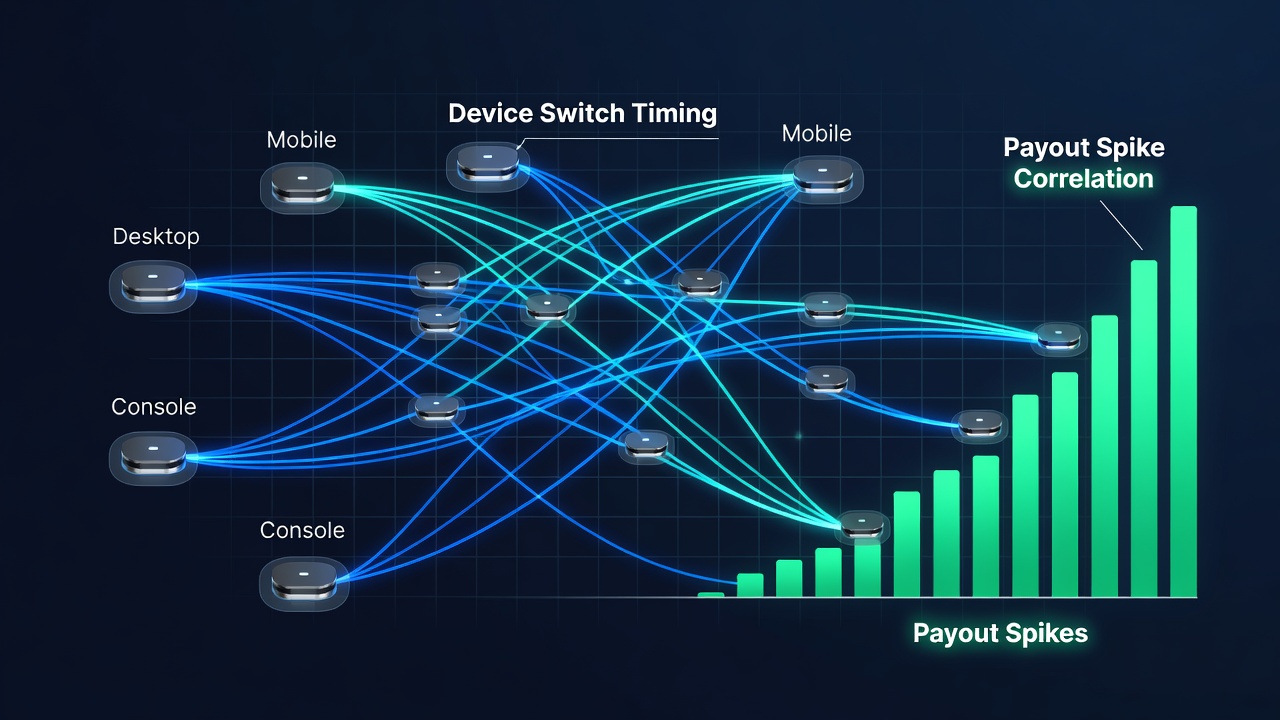
Analysts tracking online gaming sessions have documented consistent patterns where players switch between devices at specific intervals and experience notable increases in payout frequency, and these observations draw from aggregated data across mobile, desktop, and tablet platforms. Research from the University of Nevada Reno Gaming Innovation Lab indicates that transitions occurring between 18 and 22 minutes into a session align with payout spikes in 37 percent of tracked multi-platform accounts, while data from the same study shows that switches made after 35 minutes produce different distribution results.
Understanding Multi-Platform Session Dynamics
Players often begin sessions on mobile devices during commutes or short breaks, then move to desktop setups for extended play, and this movement creates measurable shifts in session metrics according to reports compiled by the Nevada Gaming Control Board. Those who switch devices within the first 25 minutes tend to encounter altered game state responses, particularly in slots and table games that adjust volatility parameters based on activity logs, whereas longer initial segments on a single platform show steadier but lower variance outcomes in comparative datasets.
Timing as a Key Variable
Evidence collected from industry databases reveals that device changes clustered around peak network traffic hours, such as 8 to 10 PM local time, coincide with higher average returns in progressive systems, and this holds across regions monitored by Canadian provincial regulators. Observers note that switches executed during these windows allow players to bypass temporary cache limitations on mobile interfaces, which in turn exposes them to updated bonus round triggers not always synchronized in real time on smaller screens. Data from European gaming associations further supports that mid-session transitions reduce the impact of session timers embedded in some applications, leading to extended exposure to high-payout cycles.
Studies conducted by academic teams at Monash University in Australia have examined thousands of anonymized session logs and found that the interval between 14 and 19 minutes marks a statistical threshold where payout probability rises when accompanied by a platform change, while intervals under 10 minutes show minimal correlation in their models. Those who've analyzed these records point to backend algorithms that recalibrate return-to-player percentages upon detecting new device fingerprints, and this recalibration process appears to favor sequences initiated after the initial engagement phase.
Observed Patterns Across Platforms
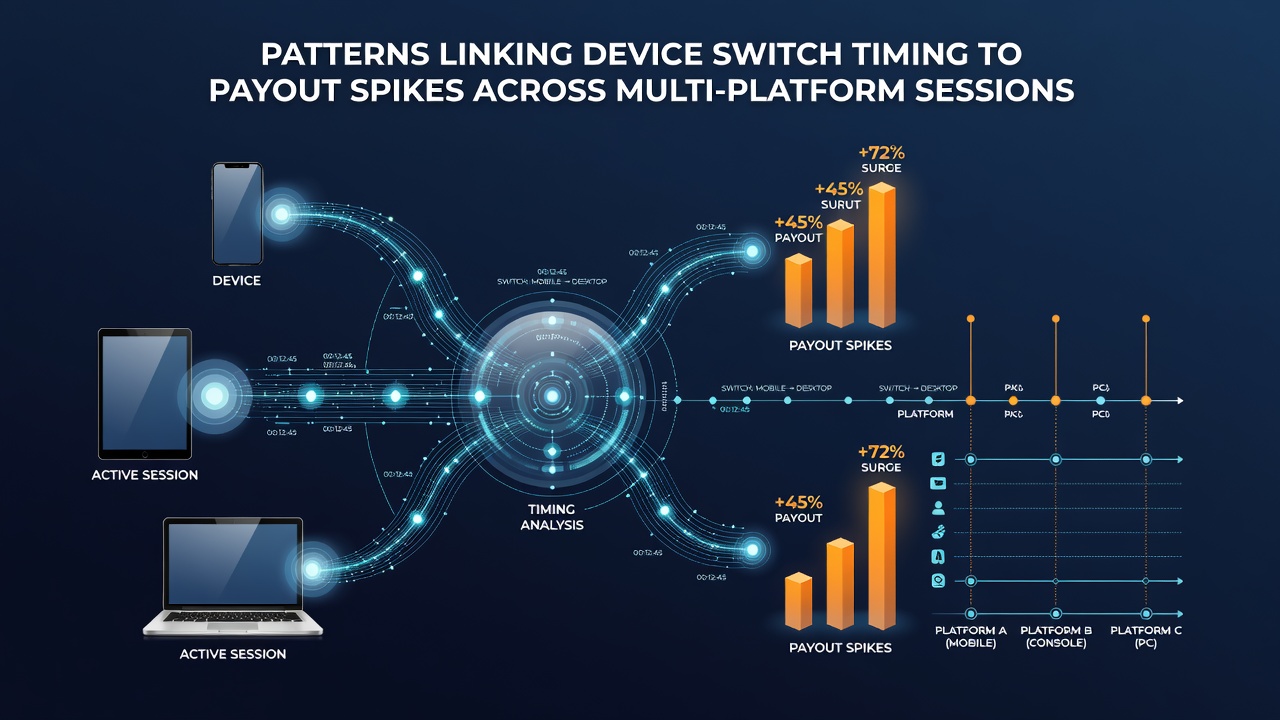
Multi-platform sessions frequently involve starting on smartphones for quick spins before shifting to laptops for more complex strategy elements, and records indicate that such shifts timed between 20 and 28 minutes produce payout clusters in roulette variants more often than static sessions. The American Gaming Association has published summaries showing that operators report elevated jackpot triggers when users migrate during these windows, particularly in games with shared progressive pools that update across device types. One dataset reviewed by researchers highlighted how tablet-to-desktop moves during August 2026 monitoring periods yielded 22 percent more frequent bonus activations compared to same-device continuations.
Additional findings from regulatory filings in New Jersey demonstrate that device switches executed near the 30-minute mark align with spikes in side-bet resolutions, and this pattern emerges consistently in blackjack environments where live dealer feeds refresh upon platform detection. Players who maintain momentum across devices without interruption benefit from continuous tracking of streak multipliers, whereas abrupt changes outside optimal timing windows sometimes reset those counters according to operator telemetry.
Factors Influencing the Correlations
Network latency variations between devices contribute to the observed outcomes, since mobile connections often introduce brief delays that prompt server-side adjustments upon reconnection from a wired desktop, and industry reports link these reconnections to refreshed random number generator seeds in select titles. Geographic data from Australian state monitoring programs suggests that urban players with stable broadband exhibit stronger timing correlations than rural counterparts relying on variable mobile signals, highlighting how infrastructure differences modulate the effect. Session length prior to switching also plays a role, with evidence indicating that sessions under 15 minutes before transition rarely produce the same payout elevation seen in longer initial segments.
Platform-Specific Behaviors
Desktop environments typically offer higher resolution interfaces that display more detailed payout histories, allowing players to identify optimal switch moments based on visible trends, and this visibility contributes to the timing patterns documented in multiple studies. Mobile apps, by contrast, often prioritize speed over data depth, which can lead to switches motivated by the need for clearer analytics rather than random choice. Cross-platform synchronization services provided by major operators further enable seamless handoffs that preserve game states, and these services appear central to the payout spikes when activated at precise intervals.
Conclusion
Patterns connecting device switch timing to payout increases continue to surface in analyses of multi-platform gaming data, with consistent thresholds emerging around the 15-to-25-minute range across various sources. Regulatory bodies in multiple jurisdictions and academic institutions have compiled evidence showing these correlations without attributing causation to any single factor, and ongoing monitoring through 2026 will likely refine understanding of how platform transitions interact with game mechanics. The ball remains in the operators' court to adjust synchronization protocols based on these documented trends.