Digital Player Pathways: Shifting from Free Spin Incentives to Multi-Table Tournament Leadership
Cameron Zimmermann · Jul 12, 2026

Digital Player Pathways: Shifting from Free Spin Incentives to Multi-Table Tournament Leadership
Online gaming platforms track substantial movement among users who start with free spin promotions on slot titles before advancing into multi-table tournament formats. Research from industry analysts indicates that these transitions occur as players accumulate experience with bonus mechanics and then apply similar bankroll management principles in competitive poker environments where skill edges become decisive.
Data compiled across multiple sites reveals patterns where initial engagement through no-deposit spins leads to repeated deposits, and subsequent exploration of table games follows within weeks for a measurable segment of the user base. Platform operators record these shifts through loyalty program metrics that flag increased session lengths once poker sections open for participants.
Initial Engagement Through Free Spin Mechanics
Free spin offers function as entry points that introduce users to random number generator systems and volatility levels typical of modern video slots, while many recipients quickly recognize the limited long-term value in pure chance games. Observers note that once players exhaust initial bonuses they often seek formats offering greater control over outcomes, which directs attention toward poker variants where decision-making influences results more directly.
Figures released by the American Gaming Association show consistent growth in cross-product activity, with users moving between verticals on the same account rather than creating separate profiles. This consolidation allows operators to monitor progression through unified dashboards that capture deposit frequency alongside game-type switches.
Transition Triggers and Behavioral Indicators
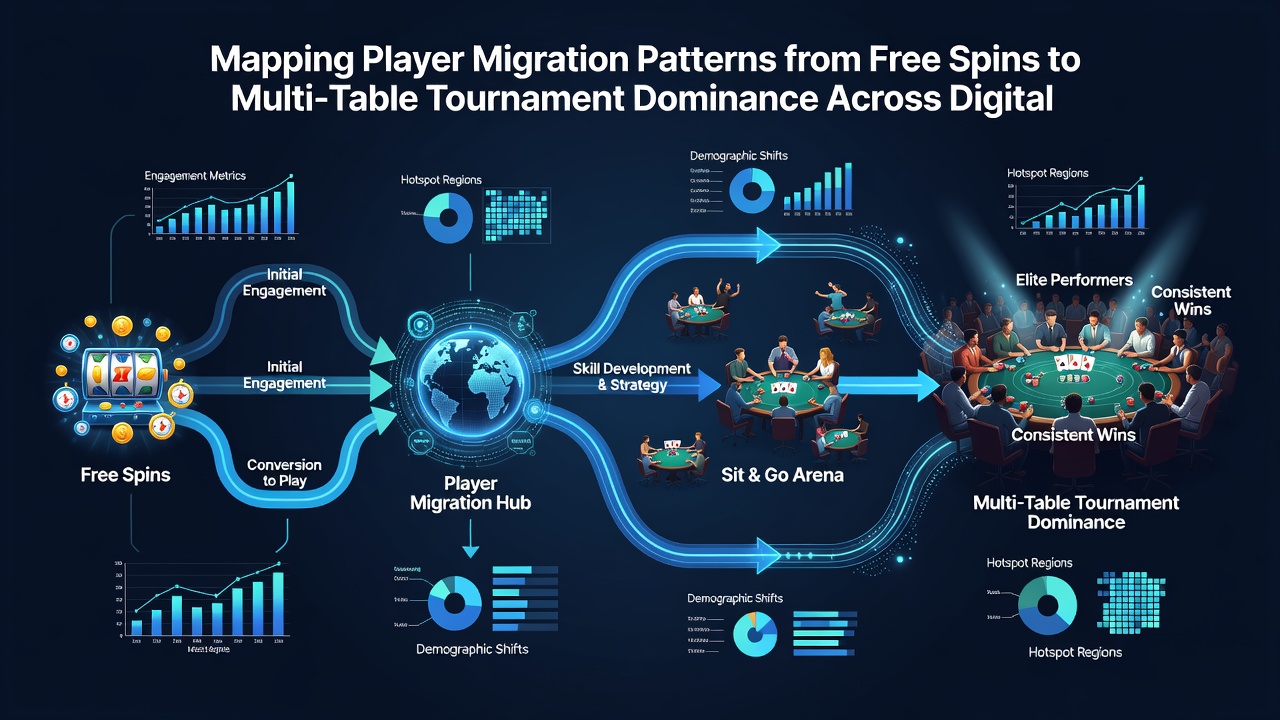
Players demonstrate migration when deposit patterns stabilize and average bet sizes increase, signaling readiness for higher-stakes environments. Tournament structures appeal because they convert smaller entry fees into larger potential payouts through multi-table formats that reward consistent performance over hundreds of hands. Studies conducted by university researchers at UNLV's International Gaming Institute highlight how bonus-derived bankrolls frequently seed first tournament buy-ins, creating measurable pathways documented in anonymized transaction logs.
Platform algorithms detect these changes through session analytics that flag extended play in poker lobbies following periods of slot activity. Operators respond by surfacing targeted MTT schedules and satellite qualifiers that align with user timing patterns observed in the data.
Platform Features Enabling Cross-Format Movement
Integrated wallets and shared progressive systems reduce friction for users exploring new game types, while unified leaderboards display both slot achievements and tournament rankings side by side. Mobile applications further support continuity because push notifications about upcoming MTTs reach players during slot sessions, prompting immediate switches without leaving the ecosystem. European operators report similar dynamics through aggregated reports from the European Gaming and Betting Association that document comparable migration rates across regulated markets.
July 2026 updates to several major platforms introduced enhanced tracking dashboards that visualize individual user journeys from bonus activation dates through first MTT cashes, giving both players and operators clearer visibility into these patterns without requiring manual review of raw logs.
Regional Variations in Migration Rates
North American platforms show higher conversion percentages from free spin users into poker tournaments compared with some Asian markets where slot engagement remains dominant longer. Australian regulatory filings indicate steady cross-product movement tied to seasonal promotions that bundle spins with tournament tickets. These geographic differences arise from varying regulatory frameworks around bonus structures and advertising restrictions that influence how operators present progression options.
Case examples drawn from anonymized operator data illustrate users completing dozens of free spin rounds before entering low-stakes sit-and-gos, then scaling into multi-table events once win rates stabilize. Such sequences repeat across thousands of accounts, confirming the pattern as structural rather than isolated.
Conclusion
Mapping these migration patterns provides operators and analysts with actionable insights into product sequencing and retention strategies. Evidence from transaction records and session data demonstrates clear directional movement from free spin starting points toward multi-table tournament participation across numerous digital platforms. Continued monitoring through established reporting frameworks will track how these pathways evolve alongside new feature releases and regulatory adjustments in coming periods.