Holiday Period Dynamics: How Christmas and New Year Affect Mobile Gaming Patterns in Britain
Cameron Zimmermann · Aug 18, 2026
Holiday Period Dynamics: How Christmas and New Year Affect Mobile Gaming Patterns in Britain
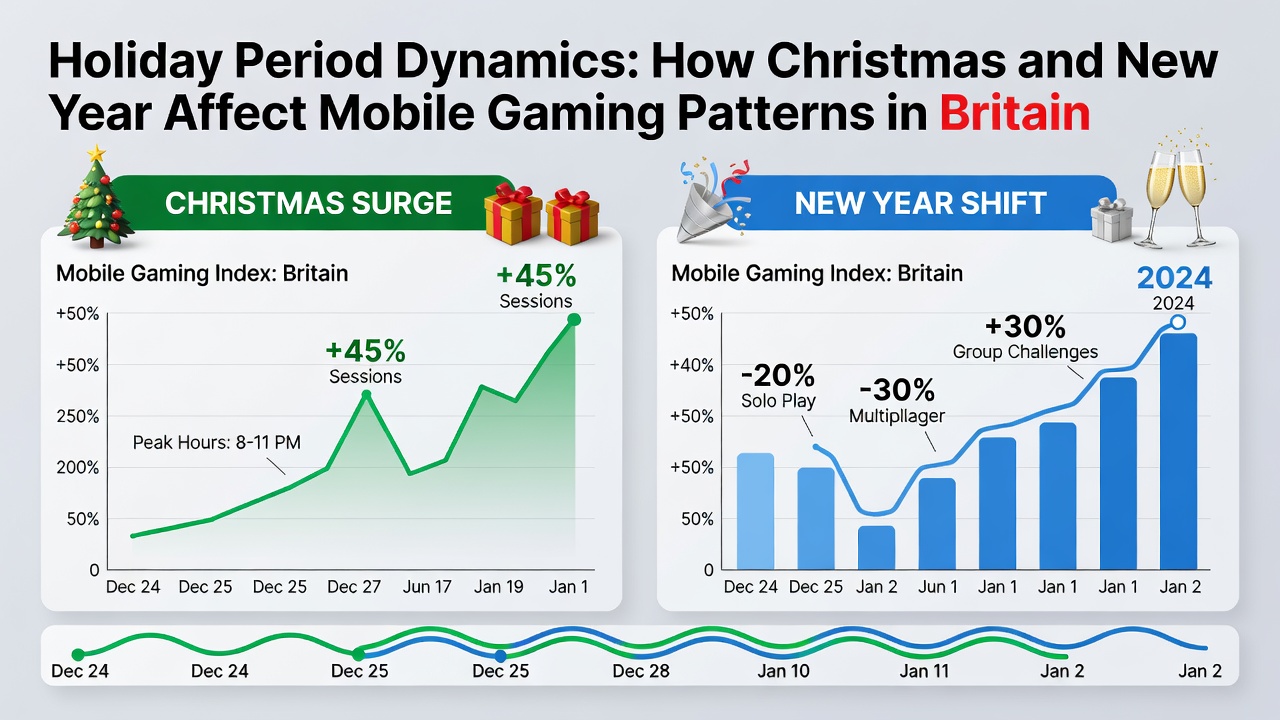
British mobile gaming activity shifts noticeably each year around Christmas and New Year as holiday schedules alter daily routines and device usage patterns. Data from industry reports show increased session lengths and higher download volumes for casual and social titles during the final weeks of December, while engagement metrics for certain genres rise steadily through early January. Observers note these changes stem from extended time off work and school closures that free up blocks of leisure hours for many households across England, Scotland, Wales and Northern Ireland.
December Patterns Before the Main Holidays
Activity begins to climb in mid-December once schools break for winter recess and offices close for extended periods. Studies indicate players log more minutes per day on puzzle, simulation and multiplayer games as people fill travel time on trains and coaches or pass evenings at home with family members. Figures reveal a gradual uptick in in-app purchases during this window, particularly for seasonal events and limited-time rewards that developers time to coincide with the festive calendar.
Regional variations appear consistent year after year. Urban areas with dense public transport networks record higher afternoon and evening peaks, whereas rural districts show steadier daytime activity spread across longer stretches. Analysts tracking app telemetry data find that battery and data usage statistics climb in tandem, reflecting the shift toward mobile devices as primary entertainment sources when people spend more time away from fixed consoles or computers.
Christmas Day and Boxing Day Shifts
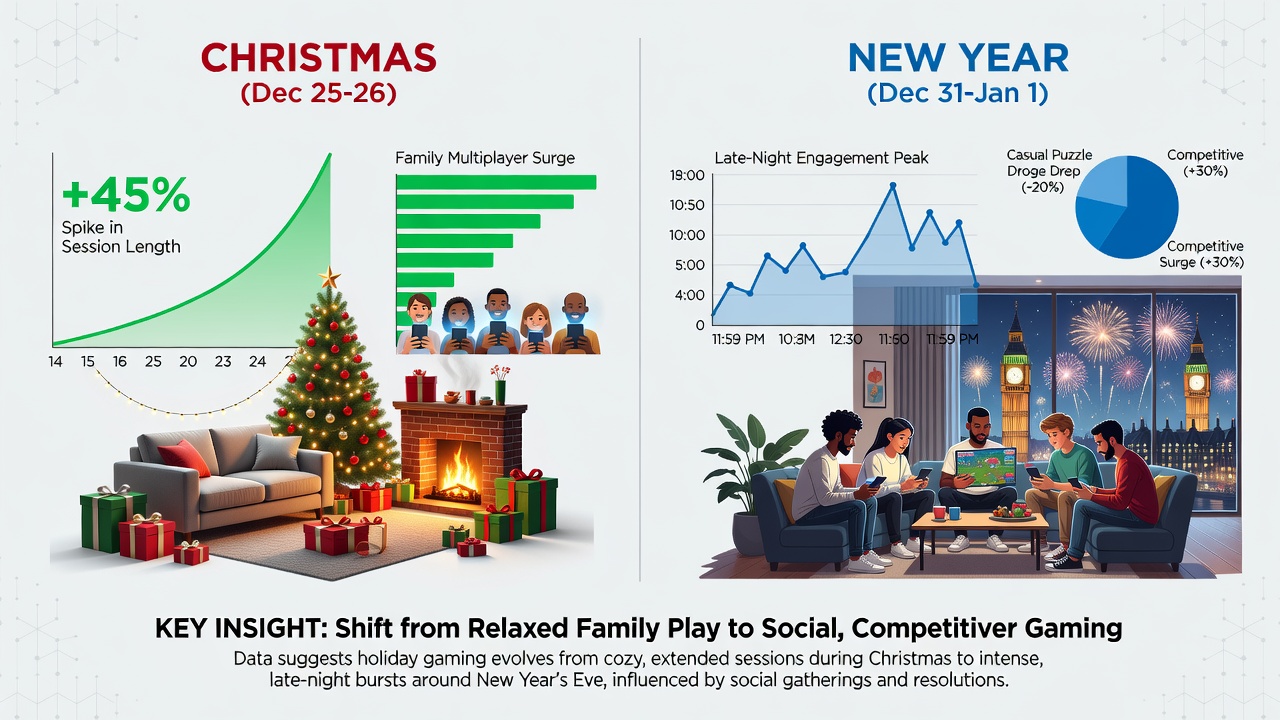
Christmas Day itself produces a distinct spike in short, repeated sessions rather than marathon play. Many users open games between family meals or while waiting for gatherings to start, leading to fragmented but frequent log-ins. Research compiled by international gaming associations indicates that social features such as gifting mechanics and cooperative challenges see elevated participation rates on 25 December compared with average weekdays.
Boxing Day extends the trend as people recover from the previous day and browse sales or travel between relatives. Mobile gaming fills intervals during these movements, with push notification response rates rising as developers send targeted reminders about holiday promotions. Data collected across multiple years shows that retention curves remain elevated through this period because new content drops keep players returning to check progress.
New Year Transitions and Early January Trends
The period between Christmas and New Year maintains elevated engagement levels as many workplaces remain closed and travel continues. App analytics indicate sustained growth in multiplayer matches and live events, especially those tied to countdown themes or winter-themed challenges. Observers tracking user behaviour note that late-night sessions increase around 31 December as people stay awake for celebrations and turn to devices for entertainment during quieter moments.
January 1 and the following days bring another measurable change. Download numbers for new titles often peak as users seek fresh experiences after exhausting holiday events within existing games. Research indicates average session duration shortens slightly once routines begin to normalise, yet overall monthly active users stay higher than November baselines well into the first week of the month. Industry reports from sources such as the Entertainment Software Association highlight similar holiday extensions observed in comparable markets, providing context for British trends.
Factors Driving These Changes
Several structural elements combine to produce the observed patterns. Extended public holidays reduce commuting demands and workplace obligations, freeing blocks of time that users allocate to mobile devices. Weather conditions typical of British winters encourage indoor activities, while family visits create shared device moments or individual downtime between group activities. Developers time content updates to exploit these windows, releasing events that reward consistent log-ins across the break.
Network infrastructure also plays a role. Improved 4G and 5G coverage across Britain supports uninterrupted play during travel, contributing to higher completion rates for longer sessions on trains and in cars. Economic factors such as gift card redemptions and post-Christmas spending further influence in-app purchase volumes, with data showing spikes in virtual currency acquisitions immediately after 25 December.
Comparative Data Across Recent Years
Longitudinal tracking reveals that the magnitude of holiday lifts has remained stable even as overall mobile gaming participation grows. Metrics collected through August 2026 continue to demonstrate predictable December-to-January surges regardless of broader economic conditions or new title releases. Comparisons with other periods, such as summer school breaks, show that winter holidays produce sharper but shorter peaks, whereas summer activity spreads across more weeks with lower daily intensity.
Genre preferences shift modestly during these weeks. Strategy and role-playing titles gain ground as players have time for deeper progression systems, while quick-match casual games retain strong numbers among users with fragmented schedules. These patterns hold across age groups, although younger demographics exhibit earlier evening peaks and older cohorts show steadier daytime engagement.
Conclusion
British mobile gaming patterns during Christmas and New Year reflect measurable responses to changes in daily structure, family schedules and developer content strategies. Data compiled from app telemetry, download statistics and regional usage reports document consistent increases in session frequency and duration across late December and early January. These dynamics persist year after year, shaped by the fixed calendar of public holidays and the seasonal timing of in-game events. Continued monitoring through 2026 and beyond will clarify whether new technologies or platform shifts alter the established seasonal rhythm.