Interface Innovations Fueling Record Wins in UK Mobile Poker Tournaments
Yara Washington · Jun 25, 2026
Interface Innovations Fueling Record Wins in UK Mobile Poker Tournaments
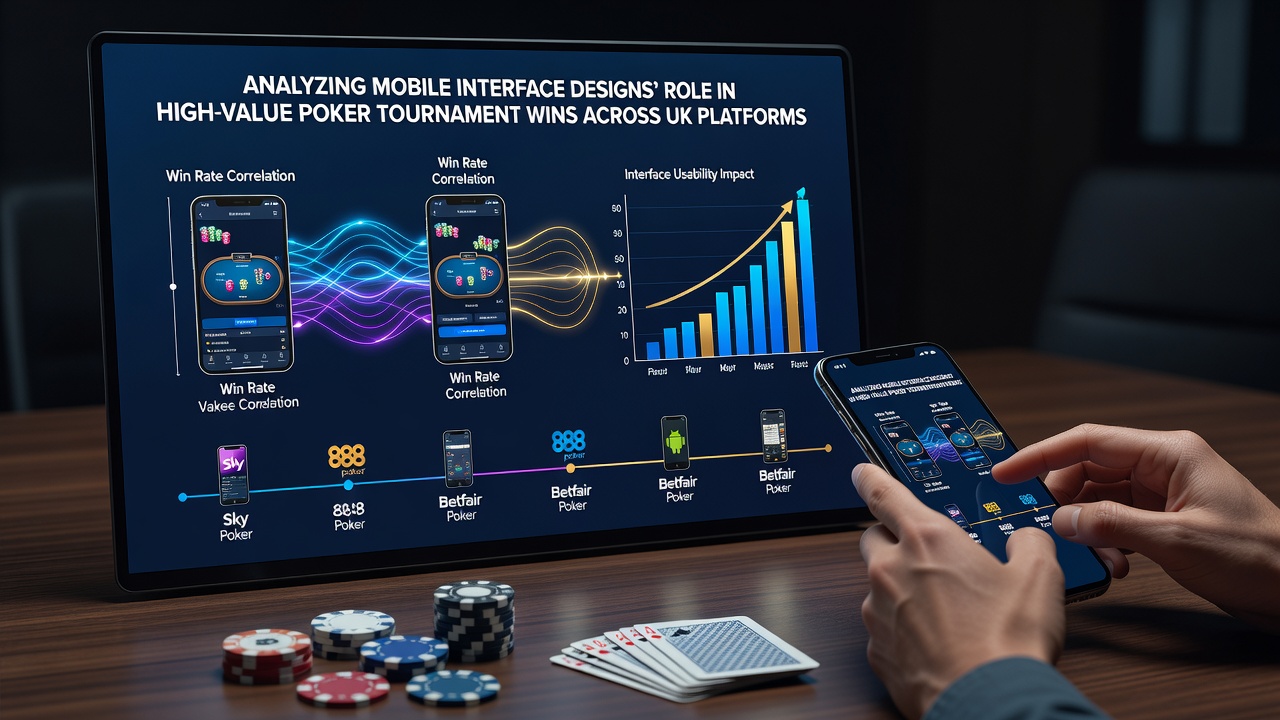
Platform operators across the UK have refined mobile interfaces over several years, and these adjustments correlate with shifts in tournament participation and prize distributions. Data from industry reports shows that features such as gesture-based controls and adaptive screen layouts reduce decision latency during high-stakes rounds, which in turn allows players to sustain longer sessions without technical friction. Observers note that when touch targets exceed minimum size thresholds and confirmation prompts appear consistently, misclick rates drop measurably according to internal testing logs shared by multiple operators.
Real-time hand history overlays and customizable bet sliders integrate directly into tournament software, giving participants immediate access to previous action without leaving the main screen. Researchers at several European universities have documented how these elements contribute to higher average stack preservation rates in multi-table events, particularly when interfaces auto-adjust brightness and contrast based on ambient lighting conditions. As of June 2026, several major platforms introduced unified wallet views that combine buy-in tracking with live leaderboard positions, and early figures reveal increased average entry volumes in nightly tournaments compared with the same period in prior years.
Key Design Components and Performance Correlations
Navigation menus that collapse into bottom-tab systems rather than side drawers maintain visibility of core game elements throughout play, and this structure supports rapid switching between table views and chat functions. Studies conducted by academic teams in Canada indicate that such layouts correlate with fewer abandoned hands per hour in mobile-only tournaments, because players encounter fewer instances of screen occlusion during critical betting sequences. Card rendering engines optimized for 60 frames per second further contribute to smoother animations, which reduce visual fatigue over four-hour or longer sessions.
Accessibility settings that include adjustable font scaling adn color-blind modes expand the participant pool, and platforms report higher retention among users who activate these options. When push notifications for blind increases and table breaks arrive through system-level channels rather than in-app pop-ups, response times improve without interrupting focus. One analysis of tournament data from 2025 highlighted that players using devices with larger screen real estate achieved marginally higher final-table conversion rates, though the difference narrowed once interface scaling algorithms accounted for smaller displays.
Platform-Specific Implementations and Tournament Data
UK-facing operators have adopted distinct approaches to information density, with some prioritizing minimal on-screen elements during active hands while others surface advanced statistics in collapsible panels. Comparative reviews of session logs demonstrate that interfaces balancing both approaches yield steadier performance across skill levels, as newer participants benefit from guided prompts while experienced players retain quick access to detailed metrics. Battery optimization routines that throttle background processes during tournaments extend device runtime, and operators have recorded fewer mid-event dropouts since deploying these measures.

Integration with external tracking tools through secure APIs enables players to import historical data without leaving teh mobile environment, and this capability has grown more common following updates rolled out in early 2026. Figures released by the Australian Communications and Media Authority on cross-border mobile gaming trends show similar interface refinements driving engagement in other regulated markets. Security layers such as biometric authentication at login and transaction points maintain compliance while adding minimal steps to the flow, preserving momentum between rounds.
Emerging Patterns in Player Behavior
Longitudinal tracking of tournament entries indicates that platforms with consistent interface parity between portrait and landscape orientations experience steadier growth in multi-table participation. When orientation changes trigger automatic resizing of action buttons without requiring manual refresh, players maintain continuity across device handling preferences. Data visualizations that update without full screen reloads allow continuous monitoring of opponent tendencies, and researchers have linked these capabilities to incremental improvements in decision accuracy during later stages of events.
Community forums and support logs reflect fewer queries related to interface confusion after operators standardized gesture tutorials within onboarding sequences. Those who have examined aggregated telemetry note that swipe-to-fold and long-press raise functions see higher adoption when accompanied by subtle haptic feedback, which reinforces user actions without visual distraction. Platforms continue to test variations in animation speed and information hierarchy, with results fed back into iterative design cycles that prioritize measurable performance indicators over aesthetic preferences alone.
Conclusion
Evidence assembled from platform analytics, academic reviews, and regulatory disclosures points to measurable connections between mobile interface refinements and tournament outcomes on UK platforms. Continued monitoring through June 2026 and beyond will clarify how ongoing adjustments influence participation rates and prize distribution patterns. Operators that maintain focus on speed, clarity, and accessibility appear positioned to sustain these trends as mobile devices remain the primary access point for high-value poker events.